
Newsletter: July 2025
Dear Friends of Joseph House:
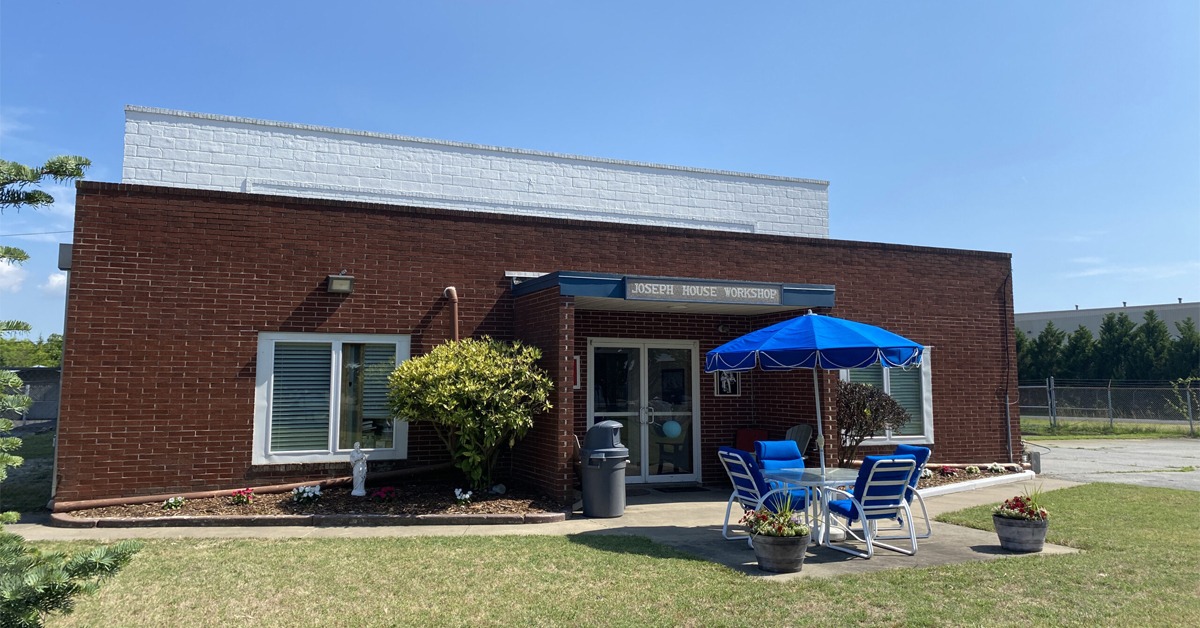
We are so used to thinking of the Joseph House Workshop as our newest ministry that we were surprised to realize this year marks its 20th Anniversary. The time has really flown by!
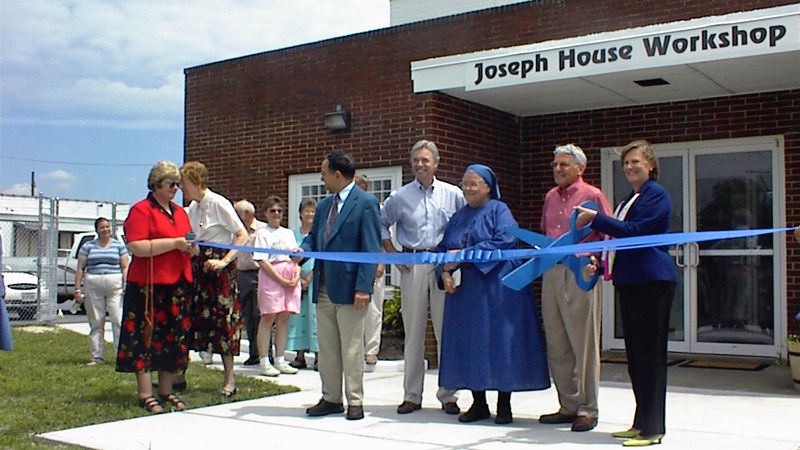
The ribbon-cutting for the Workshop was in June of 2005. Sr. Connie did the honors along with Wicomico County Council President Tony Sarbanes, Mountaire Farms President David Pogge, general contractor Ron Alessi, Sr., and Salisbury Mayor Barrie Parsons-Tilghman. The Workshop is a large facility (6,700 sq. ft.) and there were a few remaining construction issues to contend with that summer (a leaky roof, the fire alarm and sprinkler system), but finally, at the end of August, the building passed inspection. Furnishings were moved in and then on September 17, 2005, the first five men settled in to begin the program.
The Workshop was the last project involving our founder, Sr. Mary Elizabeth Gintling. It fulfilled her dream of doing something specifically for homeless men, a group of people who tugged at her heart in a special way. For twenty years, the Workshop has been a supportive home for men without one. Its long-term program provides opportunities to pursue education, job training, and employment out in the community. Health care and recovery needs are addressed and life skills are taught. Meals are prepared and eaten together family-style. Each resident is given the attention he needs to attain his individual goals. The Workshop believes in second chances for everyone.
But getting to a clearly-defined purpose like this was not easy. In 1998 when Mountaire donated to us an industrial building they had acquired — a cavernous warehouse and truck garage — we weren’t sure what to do with it. It was next door to our Crisis Center on Boundary Street, and we wanted to use the building to help those who were homeless and either chronically unemployed or underemployed. Maybe we could operate a business and give them hands-on job training? Ideas ranged from opening a bakery to doing woodworking and furniture refinishing.
In the end, after many meetings and discussions with some very good people, a lot of hard work, a few name changes (it was initially called Joseph House Too), and two pilot programs, we came to a formulation of the Joseph House Workshop as described above. Now here we are, two decades later with the Workshop going strong. It seems clear that we got it right. Sr. Mary Elizabeth always said, “The Workshop is a work in progress. We’re taking it in small steps.” Every step along the way God was with us, and by prayerfully seeking His will He led us to where He wants us to be.
It’s amazing to see how Providence works. God took care of us through the generosity of so many people. Mountaire did more than donate a building: they were partners in the project from the beginning. They removed hazardous materials from the site, paved the parking lot, installed fencing and a security system, converted the back end of the building into a food pantry and donated a walk-in freezer and forklift. Their support is the foundation of the Workshop’s success.
We also need to thank the members of the planning committee and all of the volunteers, mentors, staff members, and donors. Every contribution made a difference and continues to do so. Finally, we need to thank you, our faithful friends and benefactors. Reaching twenty years is a sign that you believe in the mission of the Workshop. We can go forward in helping the less fortunate, whether through the Workshop or the Crisis Center, because of your generous support and prayers.
Our deepest gratitude goes out to all of you.
Current Update on the Workshop
The program at the Joseph House Workshop has two phases: in Phase 1, the residents receive classroom instruction on various topics, and in Phase 2 they find employment and start working.
Four men currently reside at the Workshop. The youngest, at age 38, recently started Phase 1, and two of the others, ages 50 and 68, have just begun Phase 2 and are looking for jobs. The one who is 50 is also studying for his GED. A volunteer comes in and tutors him every week.
The fourth resident, age 64, is the “senior” member at the Workshop, having arrived more than 18 months ago. He has been working steadily at the local hospital as a Linen Tech. We also hired him to be a part-time night manager and driver at the Workshop.
A meaningful change in life takes time, and that’s what we give men who enter the Workshop. As long as a resident abides by the rules and works to the best of his ability to make progress, he will not be rushed out the door. Some feel ready to leave after a few months, others stay up to two years. The approach taken is always personal, not a “one size fits all.”
Being generous with time also gives the residents a chance to save money from their jobs. After all, making wise use of a paycheck is just as important as finding work. Once a resident becomes employed, our Program Director, Nick, takes him to the bank and gets an account set up for him. The resident also receives a secure credit card so he can learn to use it responsibly.
From the resident’s paycheck, 60% goes into savings. This will be used to pay off past bills and to give him a boost when he leaves the Workshop. Residents have been able to purchase automobiles with their savings (our resident working at the hospital has already done so).
The remainder of the paycheck is used to pay room and board (up to a maximum of $50.00 per week), and for personal use. The goal is to teach the residents patience, prudence, and self-control. These are virtues that make paid employment financially beneficial to the worker.
What do the Workshop residents hope for? They invariable say they simply want a “normal” life. Your continued support makes that humble dream come true for them. We can’t thank you enough.
Be sure to take a look at Twenty Years of Working Toward a Better Life for a photo gallery of the Workshop through the years. Next month we will have stories from the Crisis Center. The needs are great with many families asking for assistance, but together with you we can show our care for them. May the grace and peace of God be with you.
Your Little Sisters of Jesus and Mary
Prayer Requests: Send us your special intentions and the Little Sisters will pray for you: Contact Form.
Donations: Your contribution will help people in need: Donate.
Tom, a resident of the Joseph House Workshop, is seen here with a mosaic sign he made to replace the old sign that was falling apart. This was done as a project for Sr. Virginia’s art class. After the design was finalized, Tom did all the painstaking work to complete the sign, which is made of glass tiles and weatherproof materials. It was installed at the Workshop this past April. We are so pleased with it!
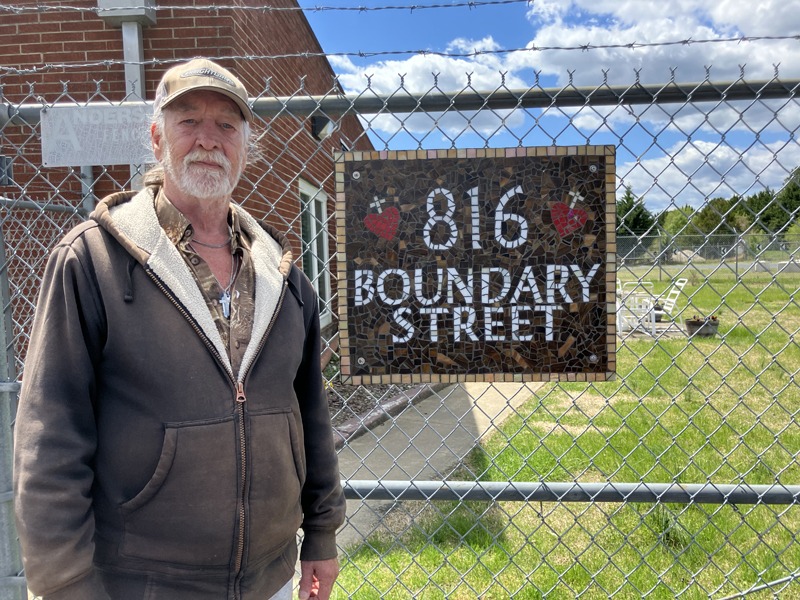
Tom has taken the initiative and done a few other projects on his own. He really has a knack for detailed creative work. Seeing the residents discover more about themselves is a rewarding part of our ministry.
We are living in times that are both difficult to navigate and to recount. They present a challenge for all of us but it is one that we should not run away from. On the contrary, they demand that each one of us, in our different roles and services, never give in to mediocrity. . . . Saint Augustine reminds of this when he said, “Let us live well and the times will be good. We are the times.”
POPE LEO XIV